Uppsala Municipality – Titus for AI-Based Caseworker Support
Uppsala is one of Sweden’s largest municipalities, and its Labour Market Administration handles financial assistance, labour market programmes, adult education and operational support for approximately 700 employees across five departments. The administration uses RiTA, the municipality’s own name for SoftRobot’s product Titus, an AI platform for managing the organisation’s assistants and agents. RiTA gives caseworkers reference-based answers drawn directly from the administration’s own governing documents and handbooks. RiTA enables open-ended questions and search across approximately 670 documents, with every answer linked to its sources. This improves caseworkers’ access to accurate information while reducing manual search work.
Agentic workflows and Agentic platform powered by  Titus.
Background
Uppsala Municipality’s Labour Market Administration has approximately 650 employees across five departments, who deal daily with matters concerning financial assistance, labour market programmes, adult education and operational support. Staff need to be able to navigate quickly through a large and constantly changing body of procedures, guidelines and governing documents in order to make correct decisions in their day-to-day work.
What is RiTA?
RiTA (Rätt Information Till Användaren – “the Right Information to the User”) is an AI-based caseworker support tool that gives employees reference-based answers grounded in the administration’s own governing documents. The service is built on an AI assistant that uses language models to understand users’ questions and compose answers. The assistant draws on the administration’s knowledge base, which currently consists of approximately 670 documents, and delivers answers with source references so that users can always verify the information. RiTA is adapted to reflect the administration’s own terminology and can distinguish documents by department through a tagging system, so that every employee gets answers relevant to their area of work.
The service was originally developed jointly by Uppsala Municipality and SoftRobot as part of an innovation project funded by Vinnova, Sweden’s innovation agency, which started in 2023. After a pilot period, the municipality procured the service in March 2026. This was a clear sign that the solution had moved from experiment to a tool in everyday operation.
How RiTA Is Used
RiTA is used by staff in all five departments of the Labour Market Administration: Financial Assistance, the Labour Market Department, Adult Education, Development and Service, and the Staff Office. Usage ranges from simple questions about booking meetings to complex assessment questions about calculating financial assistance.
Since launch, 690 users have asked RiTA questions (as of November 2026). Over the past 12 months, more than 10,300 questions have been put to RiTA, an average of 17 questions per month per active user.
Continuous Improvement
The iterative way of working is a central part of the collaboration. For example, the service enables gap analyses of information gaps and of questions that could not be answered. One such gap analysis reviewed 345 of these questions since January 2026 and identified concrete root causes:
documents missing from the knowledge base (54.5%)
existing documents that were not correctly matched (13%)
questions outside the service’s current scope (9.3%)
The results are used to prioritise actions by both the administration and the supplier. They also feed into an ongoing dialogue about how the solution should continue to be developed and improved.
The administration and the supplier meet every other week for follow-up and planning. Employees can give feedback directly in the service, and this input drives ongoing development.
Impact on Operations
RiTA is a platform that brings together the administration’s governing documents and lets employees find information in one place. Navigating and finding the right information can be time-consuming, and RiTA helps employees find what they need faster.
RiTA can also help employees get information specific to the task at hand. A handbook or guideline may contain far more than what an employee is actually looking for, and RiTA can help select what is relevant to the question. The effect naturally depends on how the question is asked, and better-phrased questions produce more precise answers.
RiTA has the greatest impact in parts of the organisation that handle a wide variety of questions and need to consult many different sources to find answers. There, RiTA can help employees search several sources at once and get an answer to the specific question they need support with.
National Context
Uppsala Municipality’s work with RiTA is aligned with several national initiatives. In February 2026, the Swedish Government adopted Sweden’s first comprehensive AI strategy, with the ambition of making Sweden the best in the world at using AI in public administration. The Agency for Digital Government (DIGG) has highlighted RiTA as a reference example of AI initiatives in the public sector. The planned national AI Workshop (AI-verkstaden) aims to make exactly this kind of solution possible to share and reuse across municipalities, regions and government agencies.
More Success Stories
Aiida enables intelligent, compliant contract management at Collectum
Collectum is a Swedish organization that administers collectively agreed occupational pensions and operates in a highly regulated environment with strict requirements for information security. To strengthen its contract management, Collectum implemented Aiida, an AI-powered solution that digitizes, security classifies, and analyzes contracts. Aiida has enabled structured metadata extraction and made all IT-related contracts searchable, improving traceability, compliance, and visibility while reducing manual handling and operational risk.
AI Medical Technologies
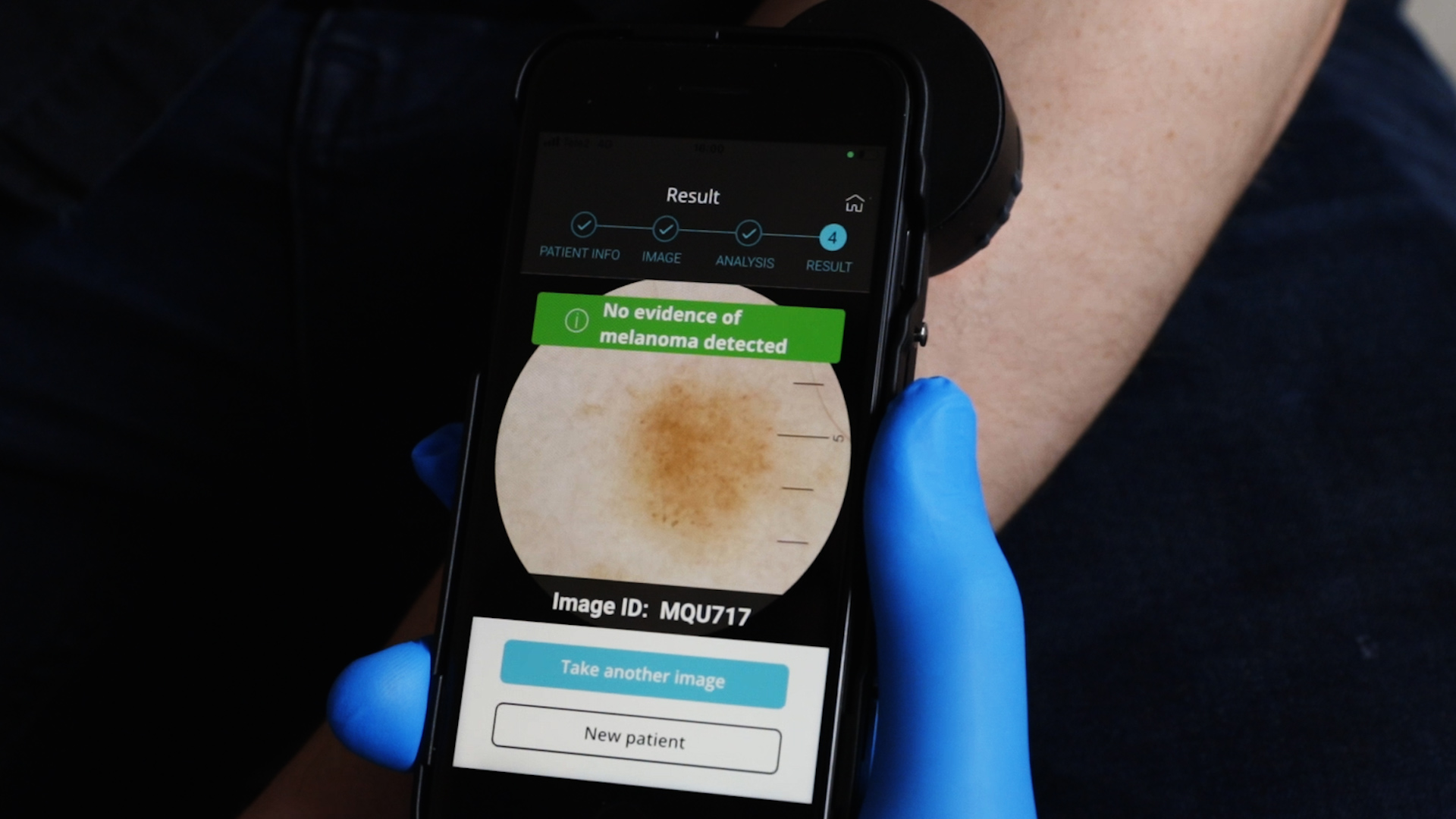
AI Medical Technologies, a pioneer in digital health solutions focusing on dermatological conditions, collaborated with SoftRobot Sweden to enhance their Dermalyser mobile application. The project aimed at developing a sophisticated classifier to distinguish between in-situ and invasive melanomas, critical for determining appropriate treatment approaches.
Ready to achieve similar results?
Let's discuss how we can transform your operations with data and AI.